


 Expert advice
  Pay by Invoice
  9,3/10 rating by clients
  Worldwide Delivery
  ISO 9001-2015
  Free Trial Service
Onebonsai has several safety training VR modules, mostly aimed at corporations. There are a lot of modules that are also very suitable for educational purposes. These modules contain subjects that are mostly overlooked when looking at ways to teach with VR, but they do prove to be very useful. For example, teachers often skip subjects like cybersecurity of fire escape training. Most teachers think that this is something students will learn in their further education. The workplace proves to be the first time lots of people learn about basic safety procedures. Allowing students to be prepared to the best of their ability for the outside world is of course goal number one for teachers. These modules and lesson ideas could help with obtaining said goal!
Fire training
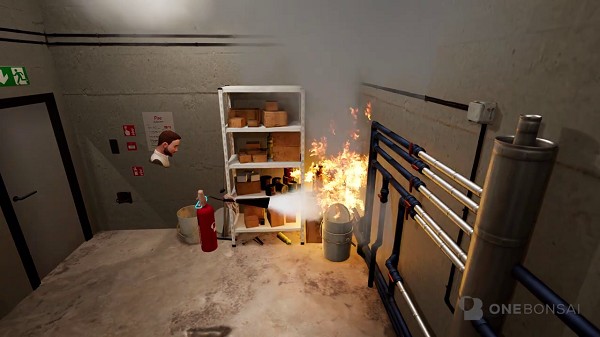
All schools are required to have a safe exit plan and personnel staff ready to safely guide the students towards the exits, if necessary. Most schools regularly practice this with a fire drill exercise. If you have more people that are prepared for an emergency, the risk of casualties or injury during a real fire escape becomes smaller.
Especially for large schools with 1000 students or more, it could take the schools’ first aid workers a long time before reaching an emergency. Teachers knowing basic first aid and fire safety is also a must, but students being prepared for an emergency is even better.
In this module, students are being taught how to use fire extinguishers, activate the schools’ fire alarm and how to evacuate safely. Providing students with this type of information is very important, especially when preparing them for a fire drill.
A good practice could be to use this module in the week leading up to the fire drill, so students are more likely to feel prepared for an actual fire escape. Using VR to teach fire training safety is also a fun activity, because students can watch each other learning and engage safely in otherwise very scary scenarios. When using VR, a set of 4 would be plenty.
Cybersecurity awareness
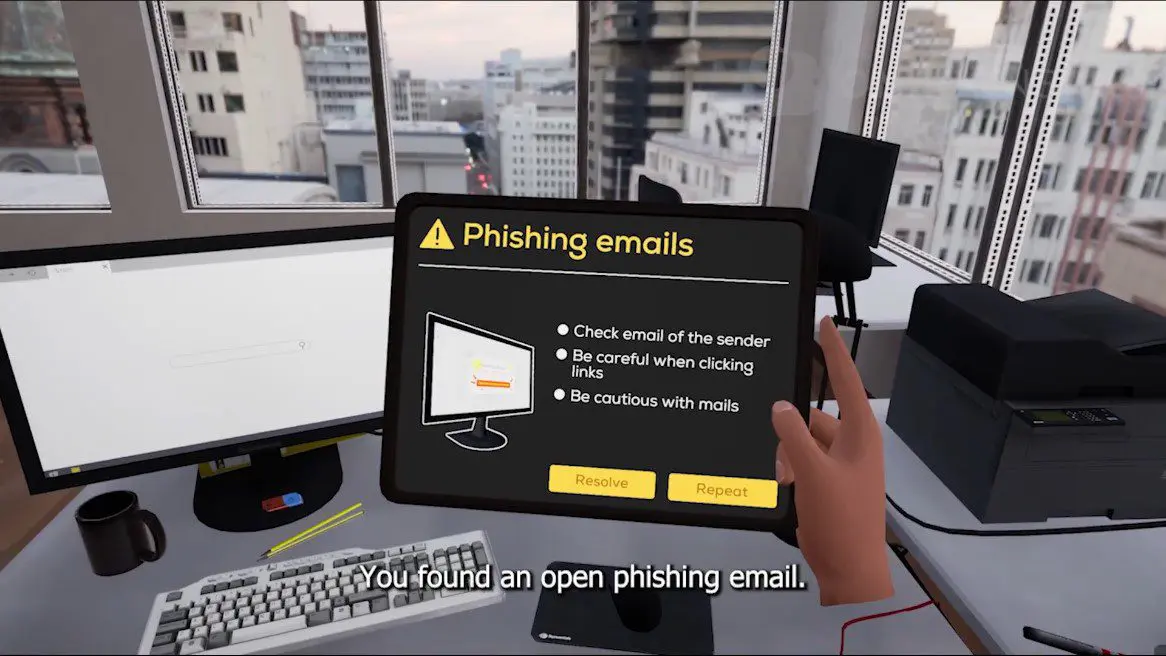
Digital literacy is becoming increasingly important for students, since we (and they) are living in a digitally rich world, where the risk of data loss or identity theft is at an all time high. Over the past years there has been a shift in the way students use technology. Last generation grew up with personal computers and therefore are very familiar with things like safe internet browsing and crafting personal passwords. The new generation however, is more experienced with using their phone.
Because both the study and work environment require knowledge of using personal computers, we must prepare students to safely use these devices.
It amazes me how many students are unaware of their way of protecting their data. Last week I askes my students how they create their passwords. Most of them answered “I just use the same one for all apps/websites”. Some students even have their passwords written in a Word-document or note on their phone. Some have their passwords managed on their iPhone and automatically generated and filled in which is safer, but makes them dependable on technology to protect their online safety.
Teaching students to become independent in this field is a must in my opinion. You could start this lesson with a public discussion. Ask students how they craft passwords of if they have ever gotten a phishing email.
Also, ask students who leave class to go to the bathroom if they have locked their device. A fun prank students play on each other is to change settings on other students’ computers of visit weird websites. This in and off itself is a relatively harmless prank, but could teach them a lot about cybersecurity. Leaving a computer logged in is a major security risk and is one of the elements being tested in this VR Experience.
A fun activity to do is to have students write down on the left side of the board all the ways they can protect their data when sitting in class. Then, after a short discussion regarding their answers, have the students do the Cybersecurity training. Allow students to use the right side of the teachers’ board to collect information they learned inside the app.
First Aid training
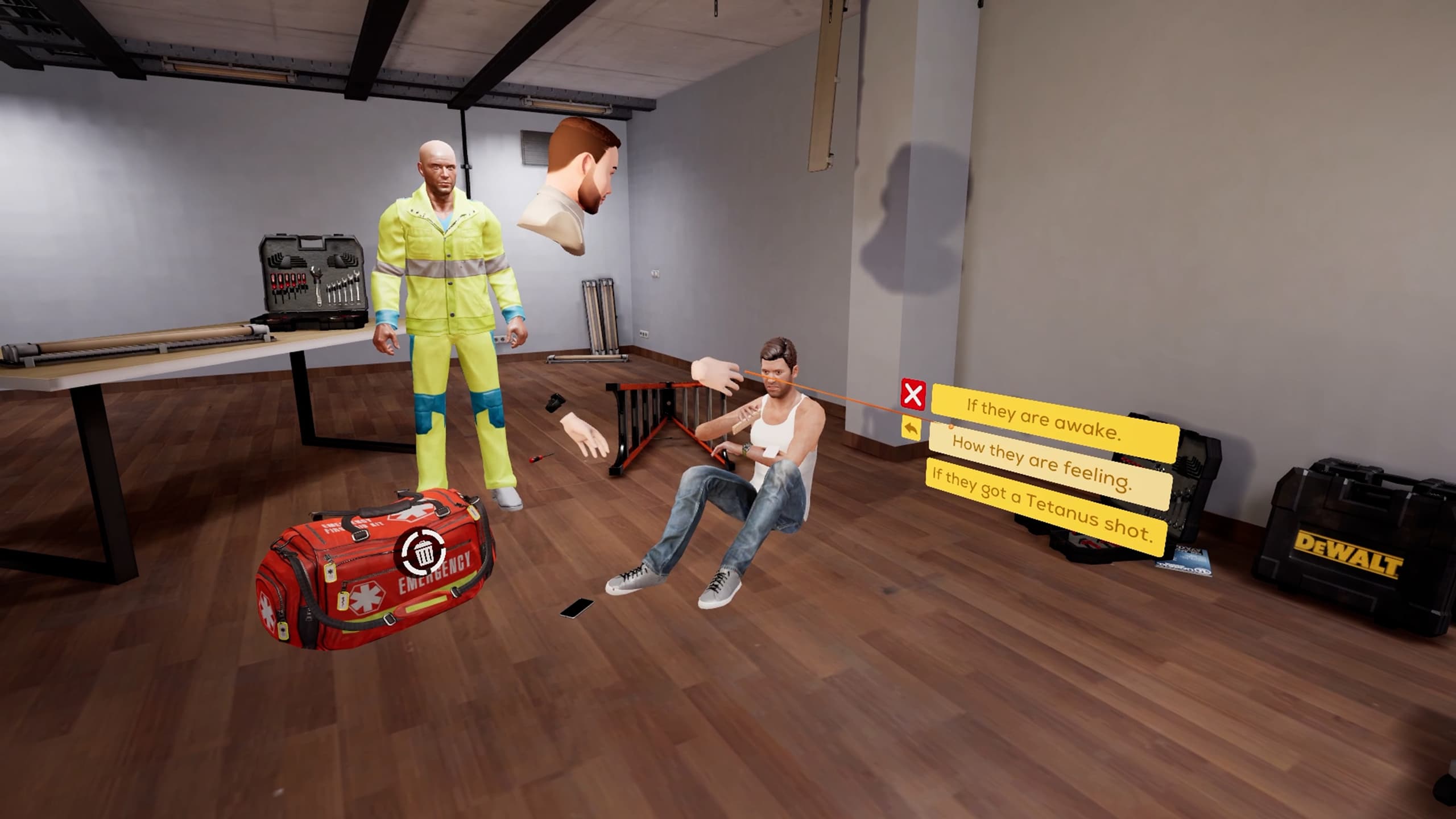
Of course, first aid training is also a great way to teach students safety. Because there are lots of first aid workers in schools this module is definitely not necessary. However, students often want to help in an emergency, but feel unprepared. This module could be used by individual students who would like to feel extra prepared for a medical emergency.
Hazard spotting
Science/chemistry teachers always start their year off with mentioning the safety protocols in their classrooms. This includes where the fire extinguishers are, the emergency shutoff button for the electrical equipment and much more. It is smart to mention that learning these things is not only important for their school career, but also for their work life. In factories there are also lots of safety rules and regulations. Using the Hazard Spotting module: have students compare the safety rules of the chemistry classrooms to the ones that they need to know for working in a warehouse. Let students compare their findings in VR to the ones that apply to the chemistry classroom.


